
45 Seasonal OISST Anomaly Map
Last updated July 23, 2026
Description: Mapped seasonal sea surface temperature anomaly
Contributor(s): Brandon Beltz, Abigail Tyrell
Affiliations: NEFSC
Indicator Family:
Indicator Category:
Synthesis Theme:
45.1 Introduction to Indicator
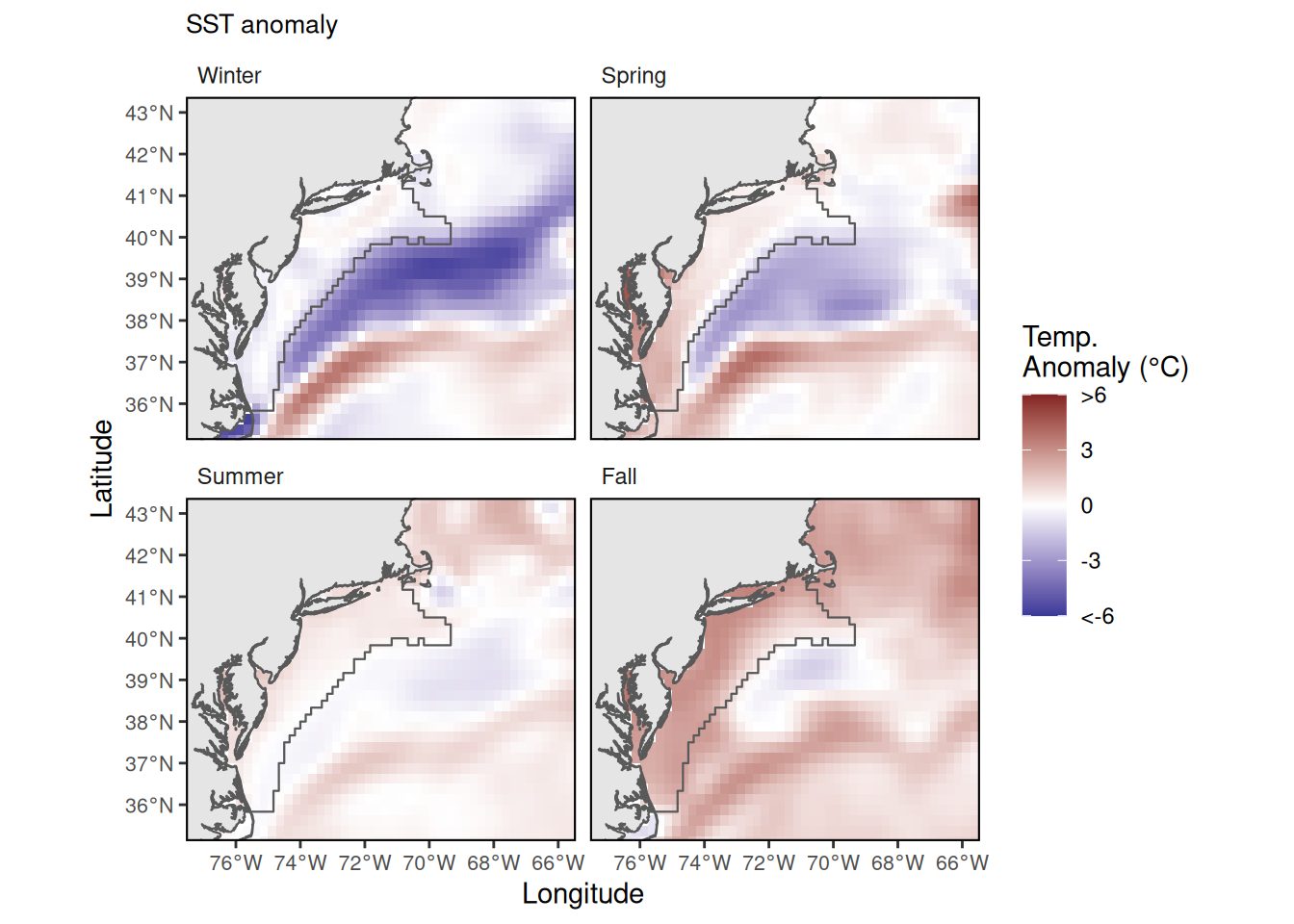
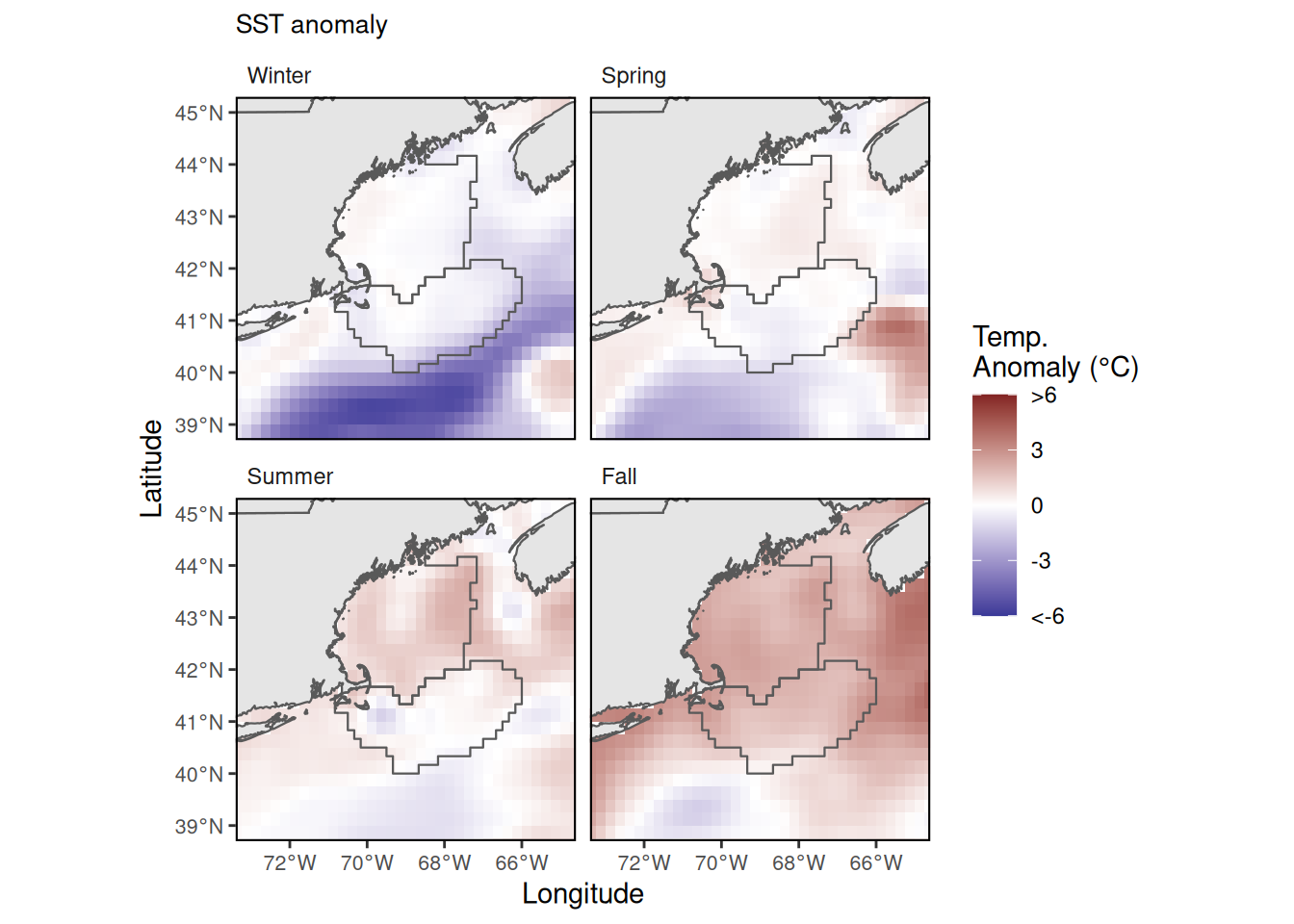
Data for sea surface anomalies were derived from the National Oceanographic and Atmospheric Administration optimum interpolation sea surface temperature high resolution data set (NOAA OISST V2). Mean seasonal-annual SST was calculated for each EPU. These data extend from 1981 to present. Anomalies are calculated by subtracting the seasonal long-term mean temperature (1982-2010) from the mean SST by year and season. Gridded anomalies are presented on a map for each year.
45.2 Key Results and Visualizations
Despite record setting ocean temperatures in 2023, the Northeast US shelf had both warm and cool sea surface temperature anomalies in each season.
Mid-Atlantic
New England
45.3 Implications
Sea surface temperature is an indicator of thermal habitat for pelagic species. Long-term warming trends suggest wide-spread environmental change in the system. Warming trends can have potential impacts on species spatial distributions, the seasonal timing of species life history events, and the overall productivity of the system. Maps show how temperature change has been distributed in each EPU each year.
45.4 Indicator statistics
Spatial scale: EPUs on full shelf map
Temporal scale: Seasonal: Winter (January - March), Spring (April - June), Summer (July - September), Fall (October - December)
Variable definitions
45.5 Get the data
Point of contact: EDAB, edab.data@noaa.gov
ecodata dataset: ecodata::seasonal_oisst_anom_gridded
Tech Doc link: https://noaa-edab.github.io/tech-doc/seasonal_oisst_anom_gridded.html