17 NE Shelf Functional Trait Indicators
Last updated July 23, 2026
Description: These data represent estimates of trait distributions for key functional traits amongst finfish species at each EPU on the Northeast Continental Shelf.
Contributor(s): Bart DiFiore, Kathy Mills, Scott Large
Affiliations: Massachusetts
Indicator Family:
Indicator Category:
Synthesis Theme:
17.1 Introduction to Indicator
Functional traits, such as length at maturity, asymptotic body size, or fecundity, offer a means to synthesize change across complex, diverse communities while avoiding the pitfalls of examining change in any given species. In general, ecological theory predicts that if many species play similar roles in an ecosystem, known as high functional redundancy, then the loss of any one species will be compensated by the prevalence of functionally similar species, allowing for greater stability and resilience at the ecosystem level. Therefore, monitoring changes in functional trait distributions can provide a means of assessing ecosystem-scale resilience.
Here, we compiled eight key functional traits and three aggregate trait ordinations for ~388 finfish species encountered in the NEFSC trawl survey. We then estimated the prevalence of each trait for each season, year, and EPU, using a community-weighed mean approach. Finally, we used regression-based approaches to explore long-term temporal shifts in functional trait distributions.
17.2 Key Results and Visualizations
I’m happy to share the code used to produce these figures from the data linked above.
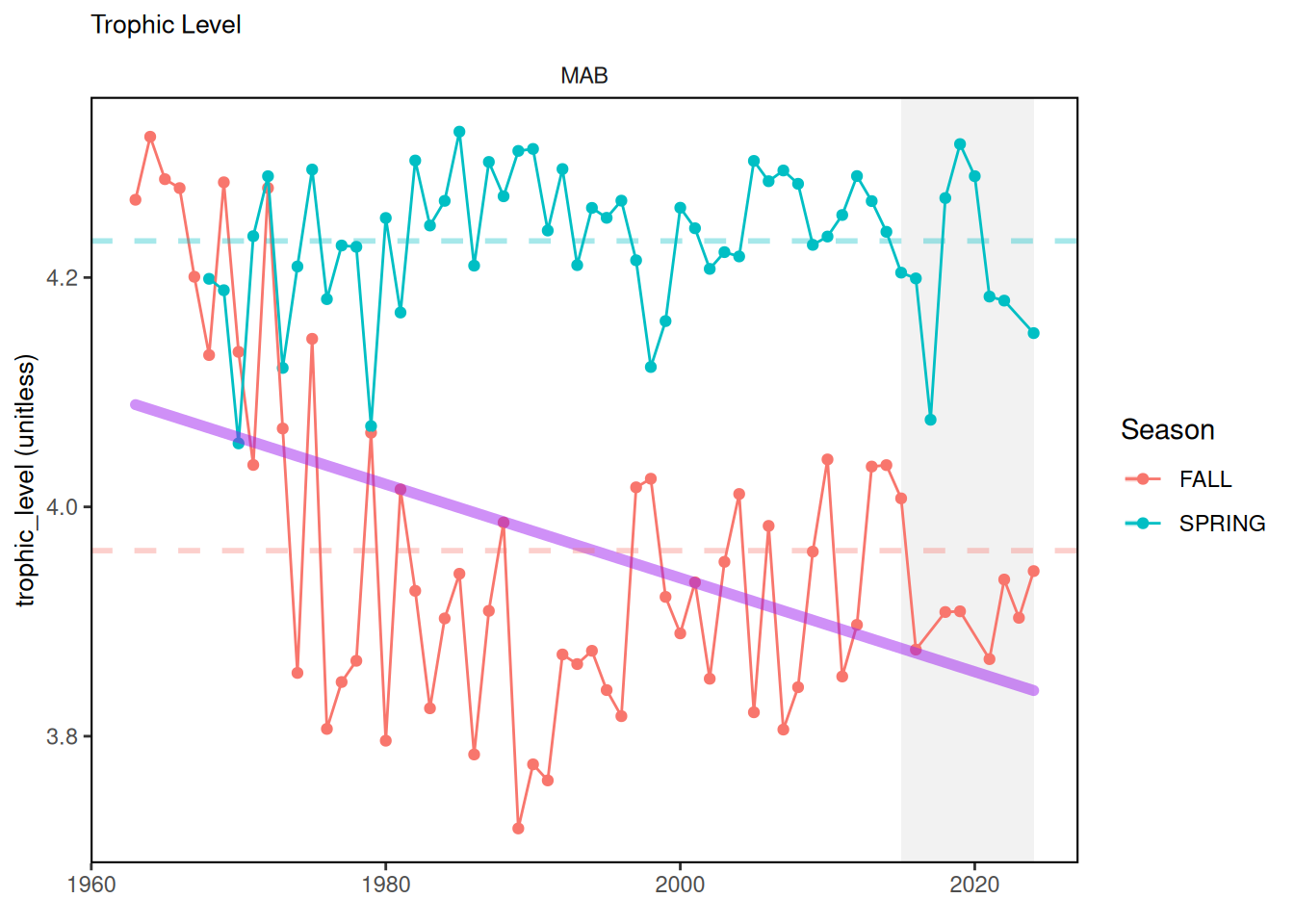
Mid-Atlantic, trophic_level
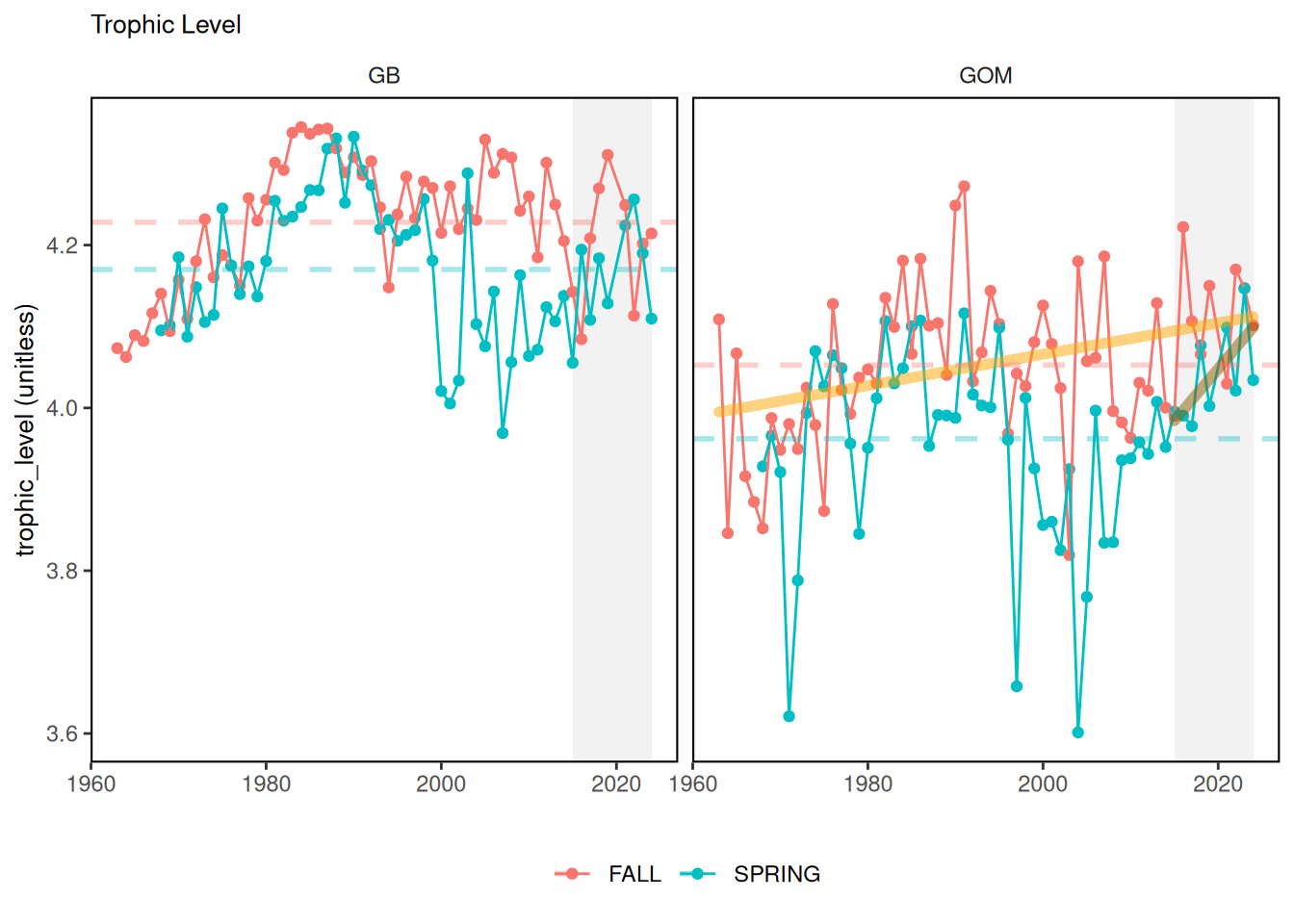
New England, trophic_level
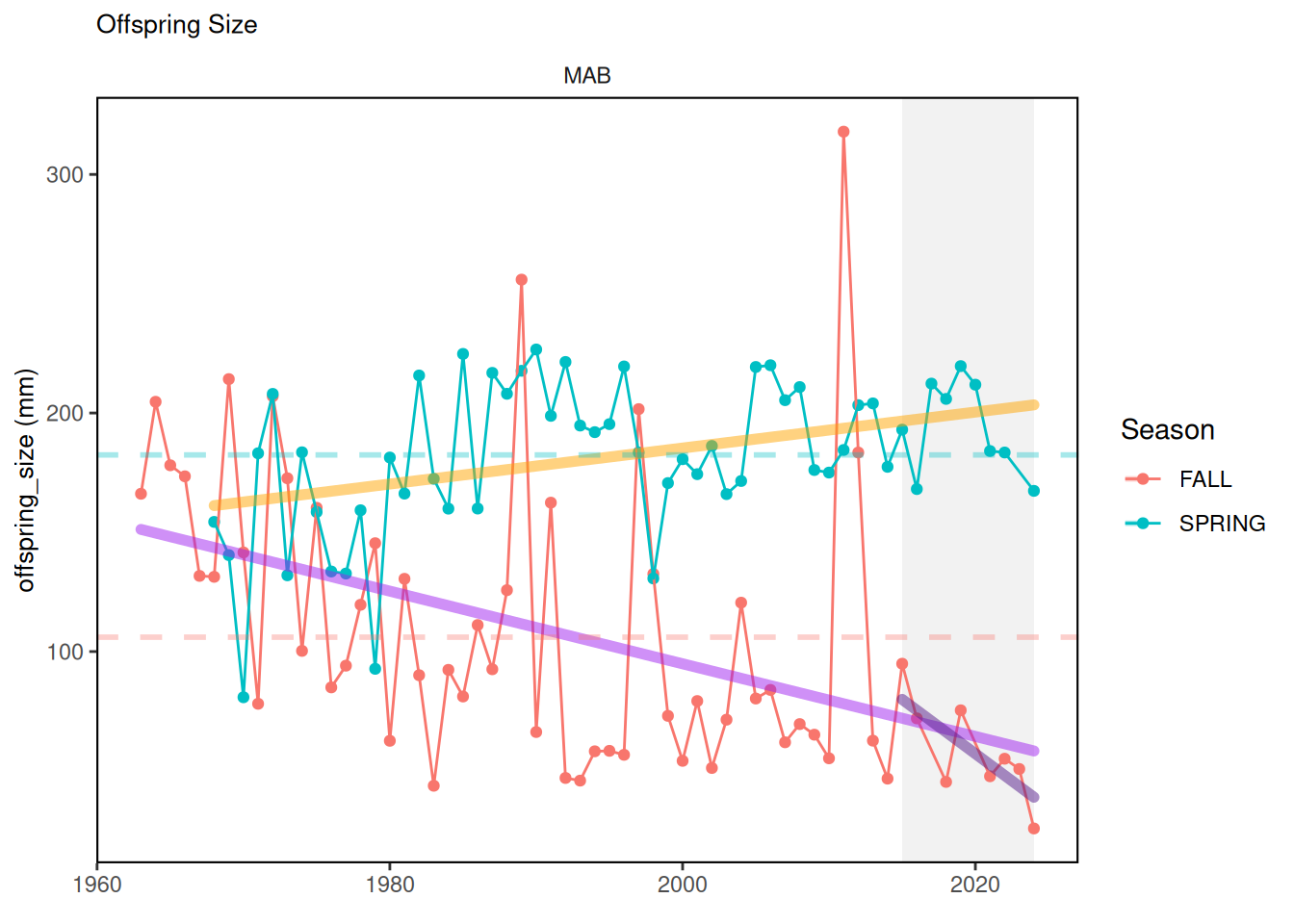
Mid-Atlantic, offspring_size
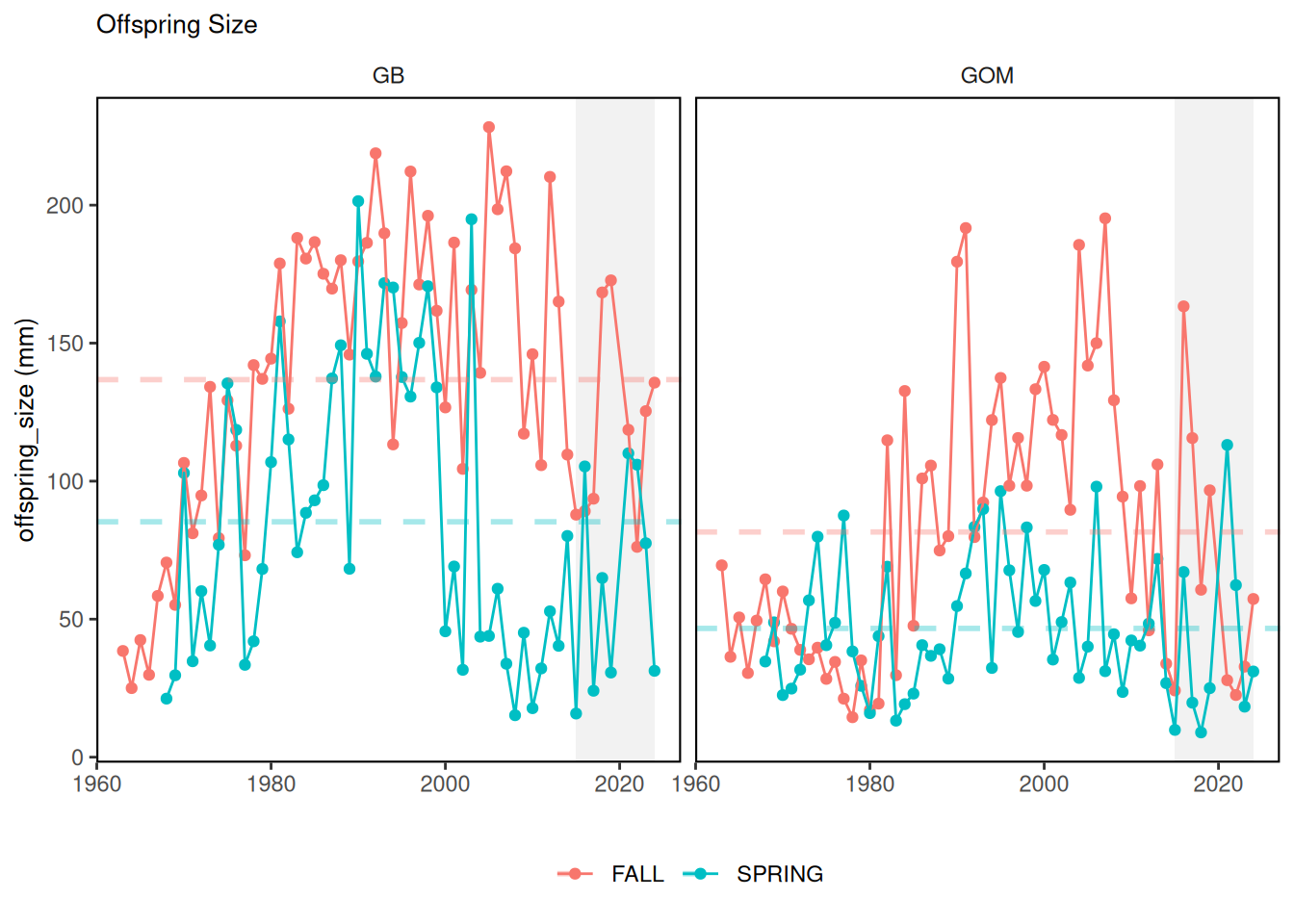
New England, offspring_size
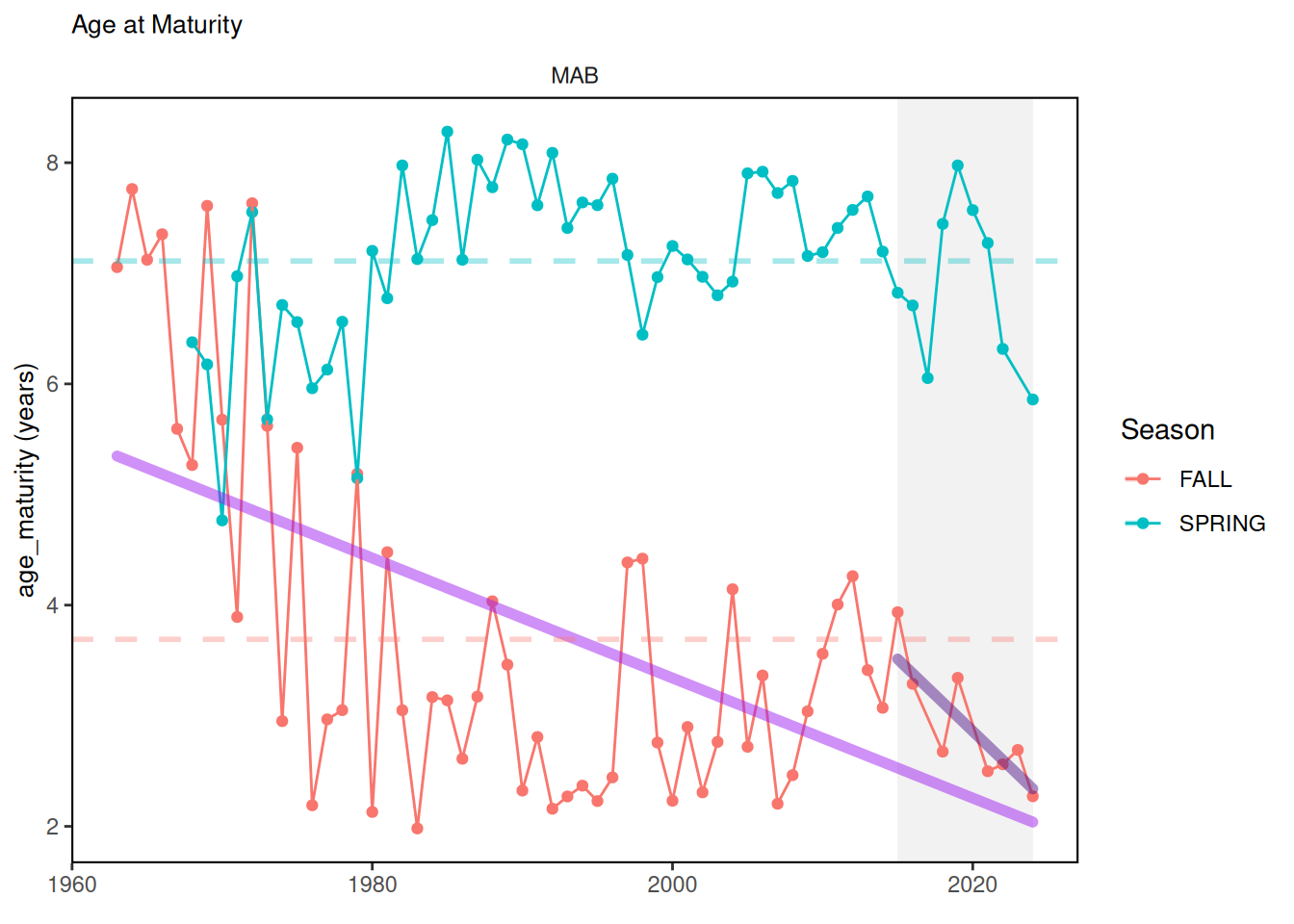
Mid-Atlantic, age_maturity
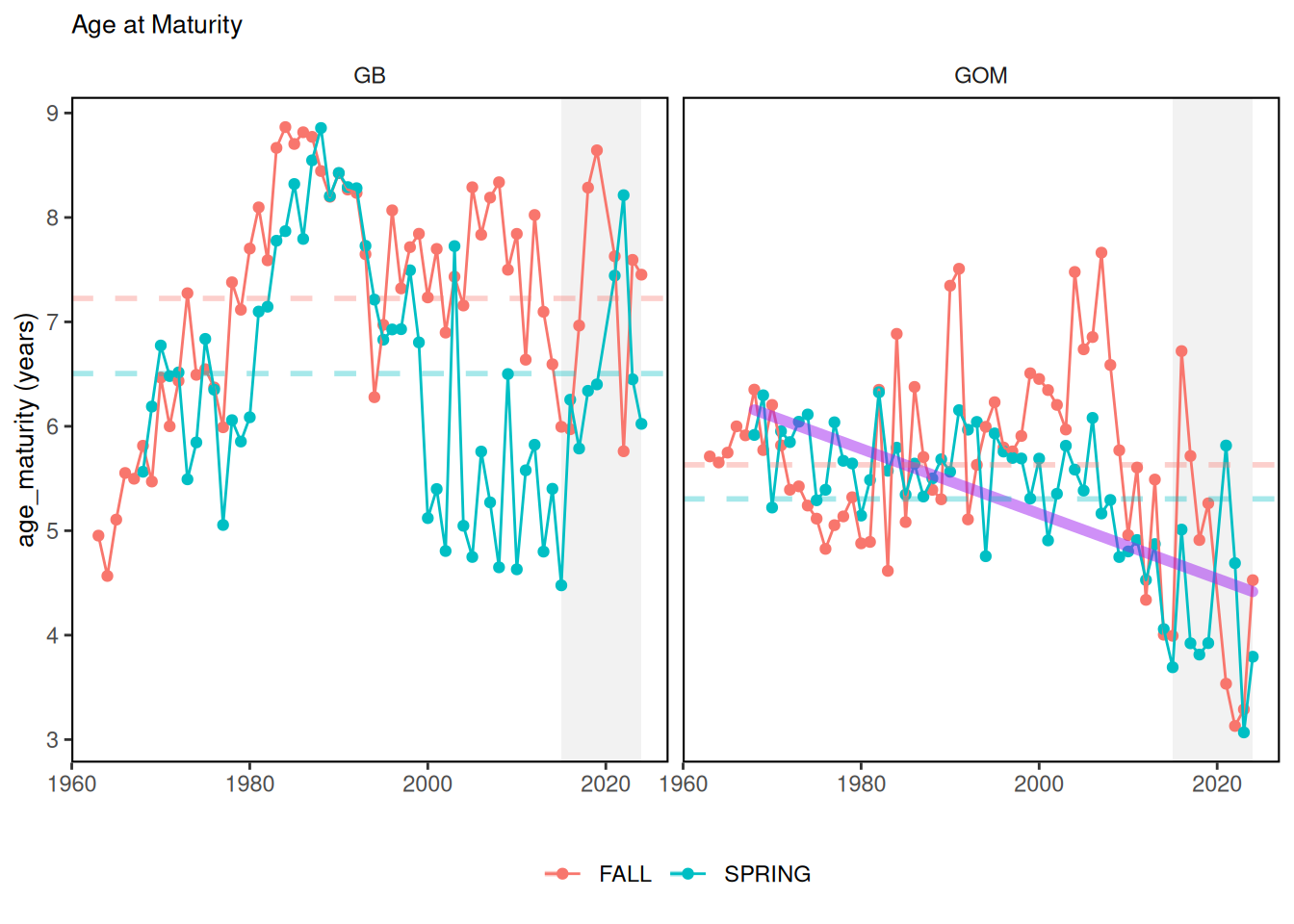
New England, age_maturity
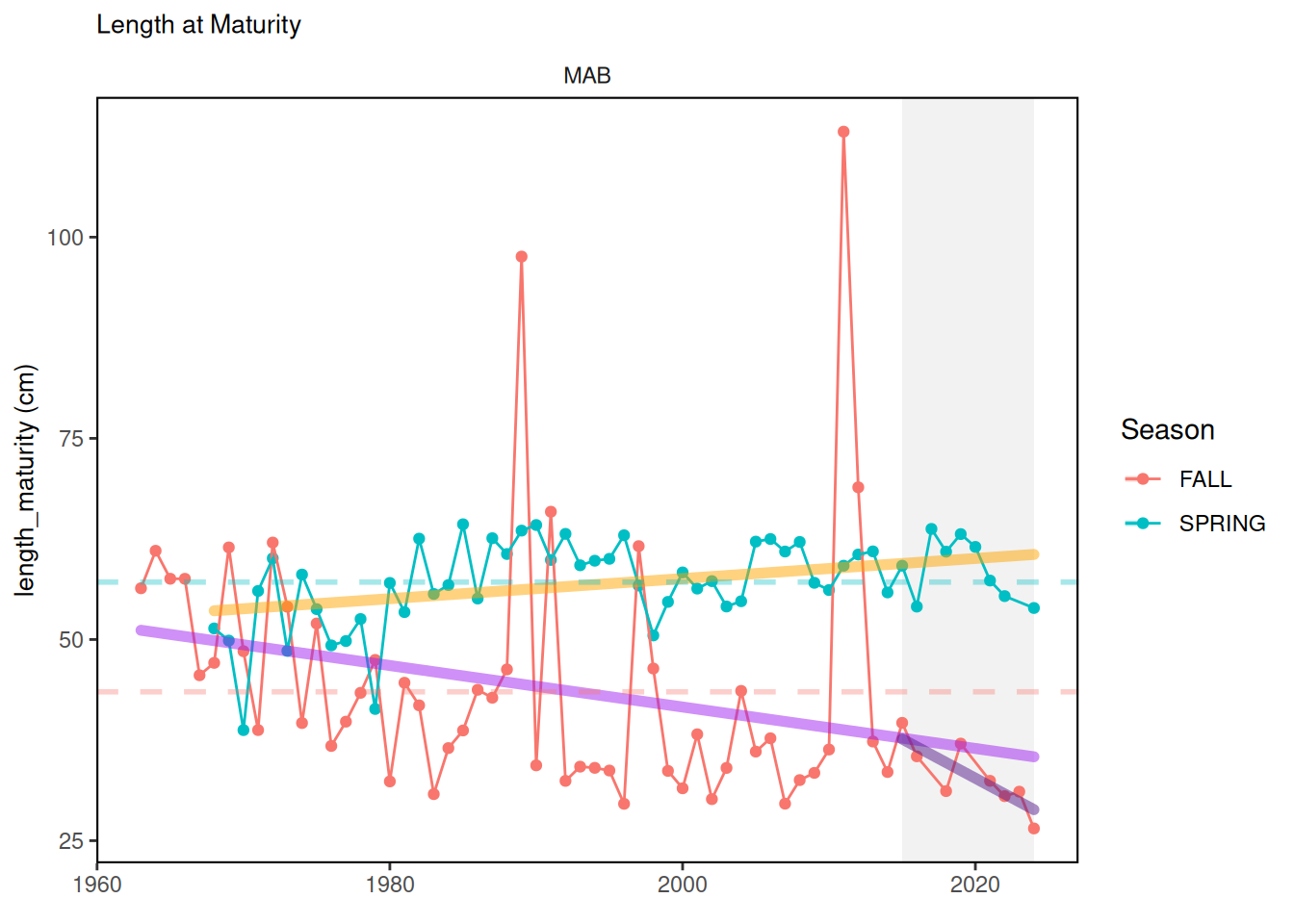
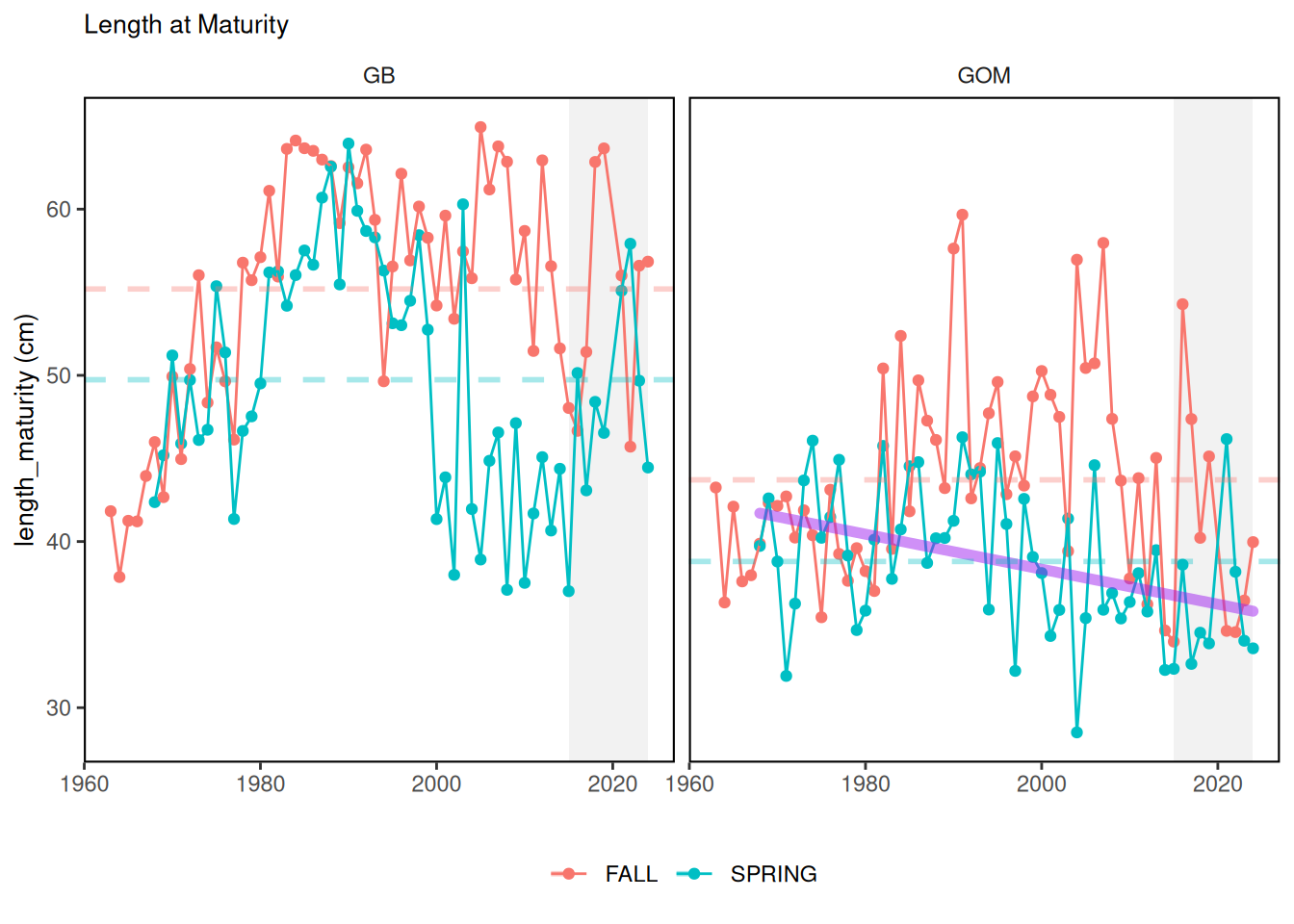
Mid-Atlantic, length_maturity
New England, length_maturity
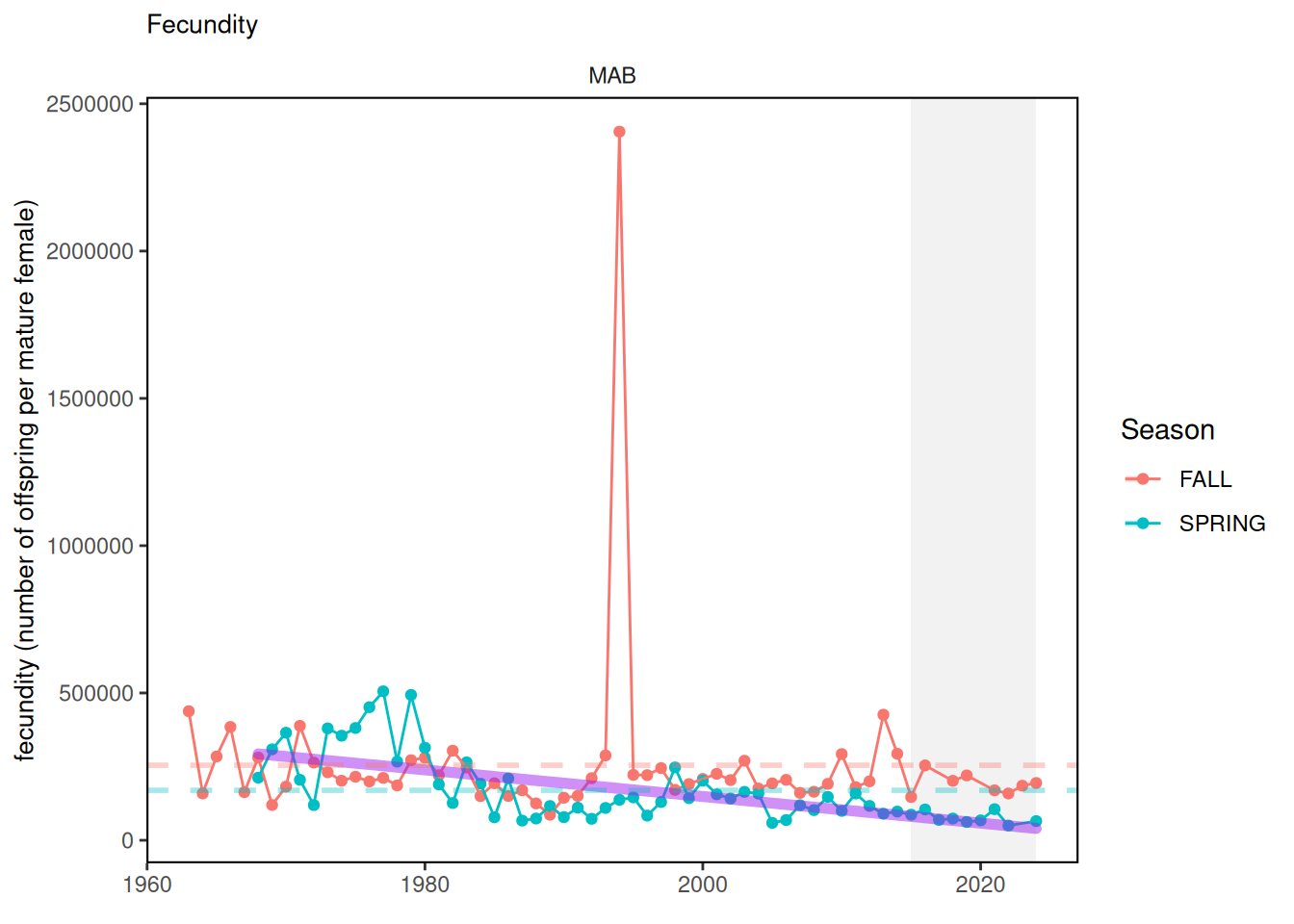
Mid-Atlantic, fecundity
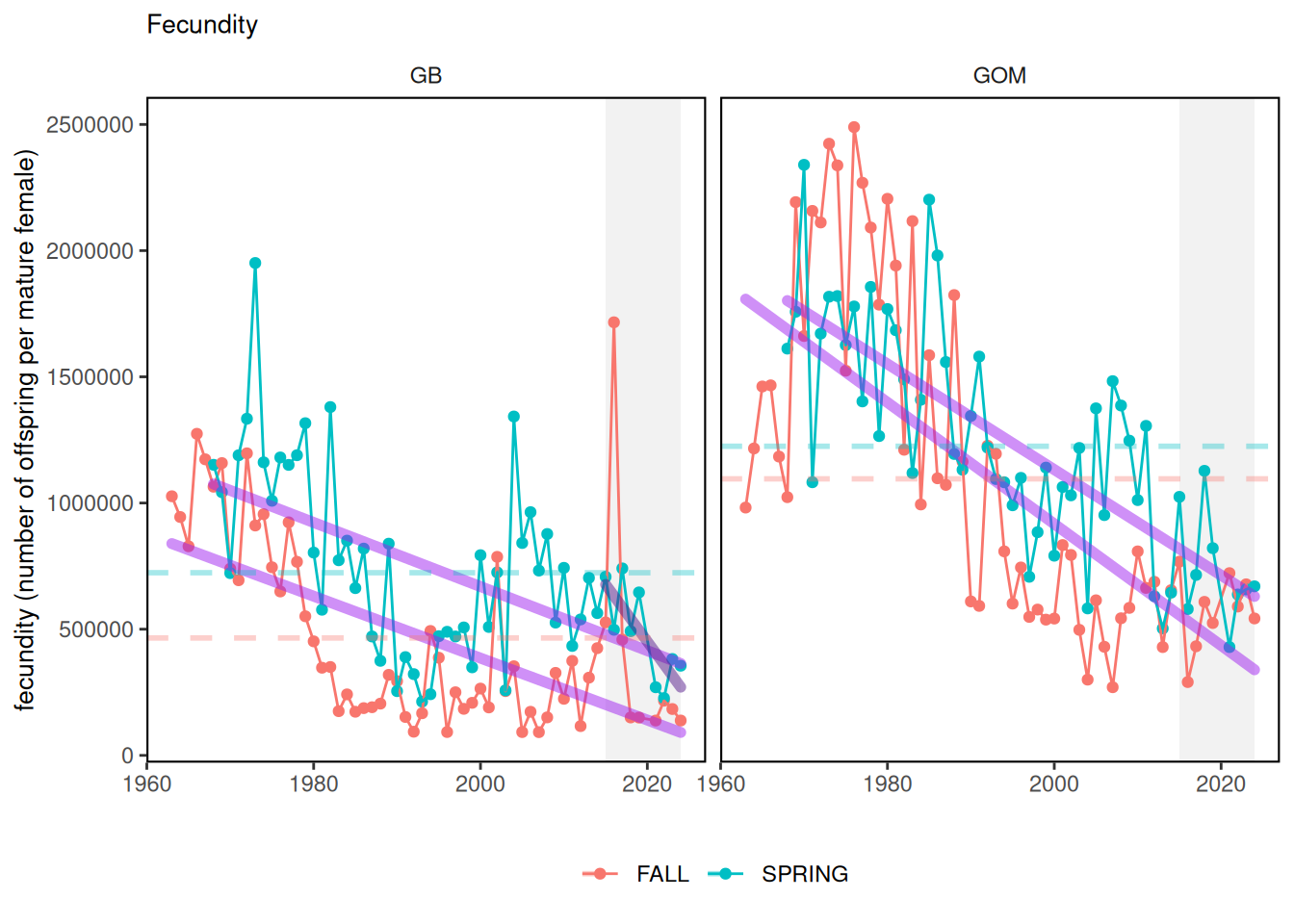
New England, fecundity
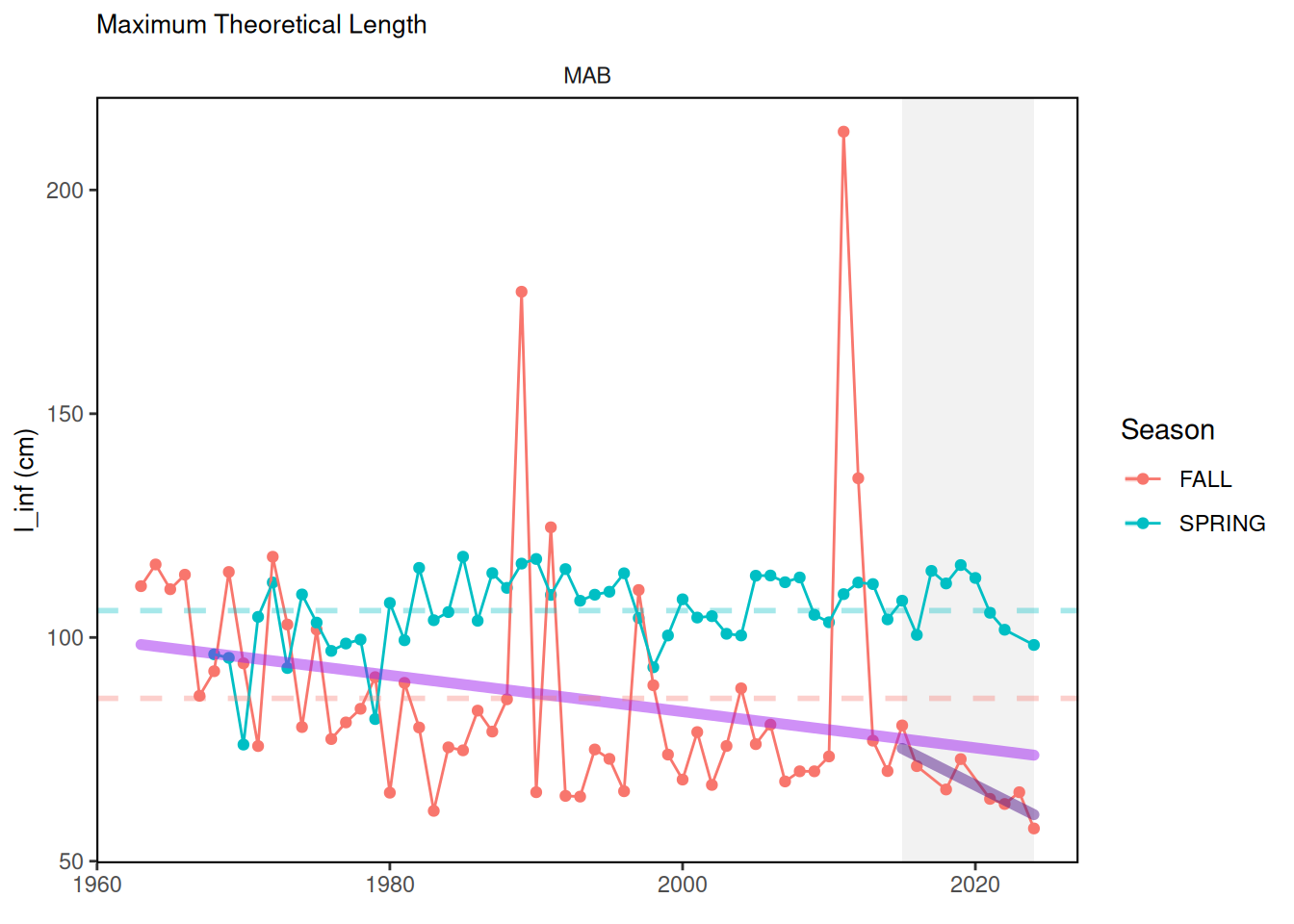
Mid-Atlantic, l_inf
New England, l_inf

Mid-Atlantic, k
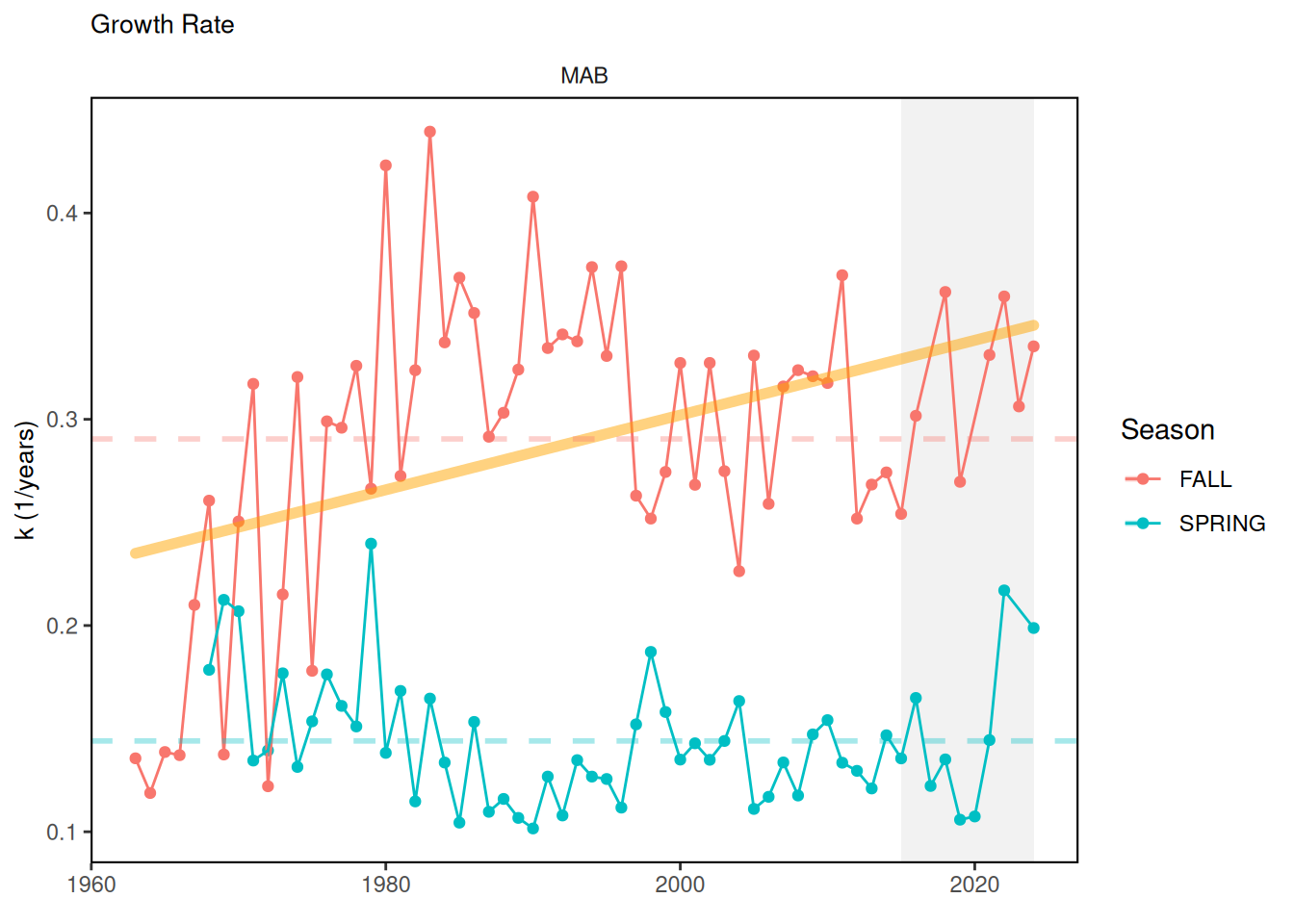
New England, k

Mid-Atlantic, max_obs_length
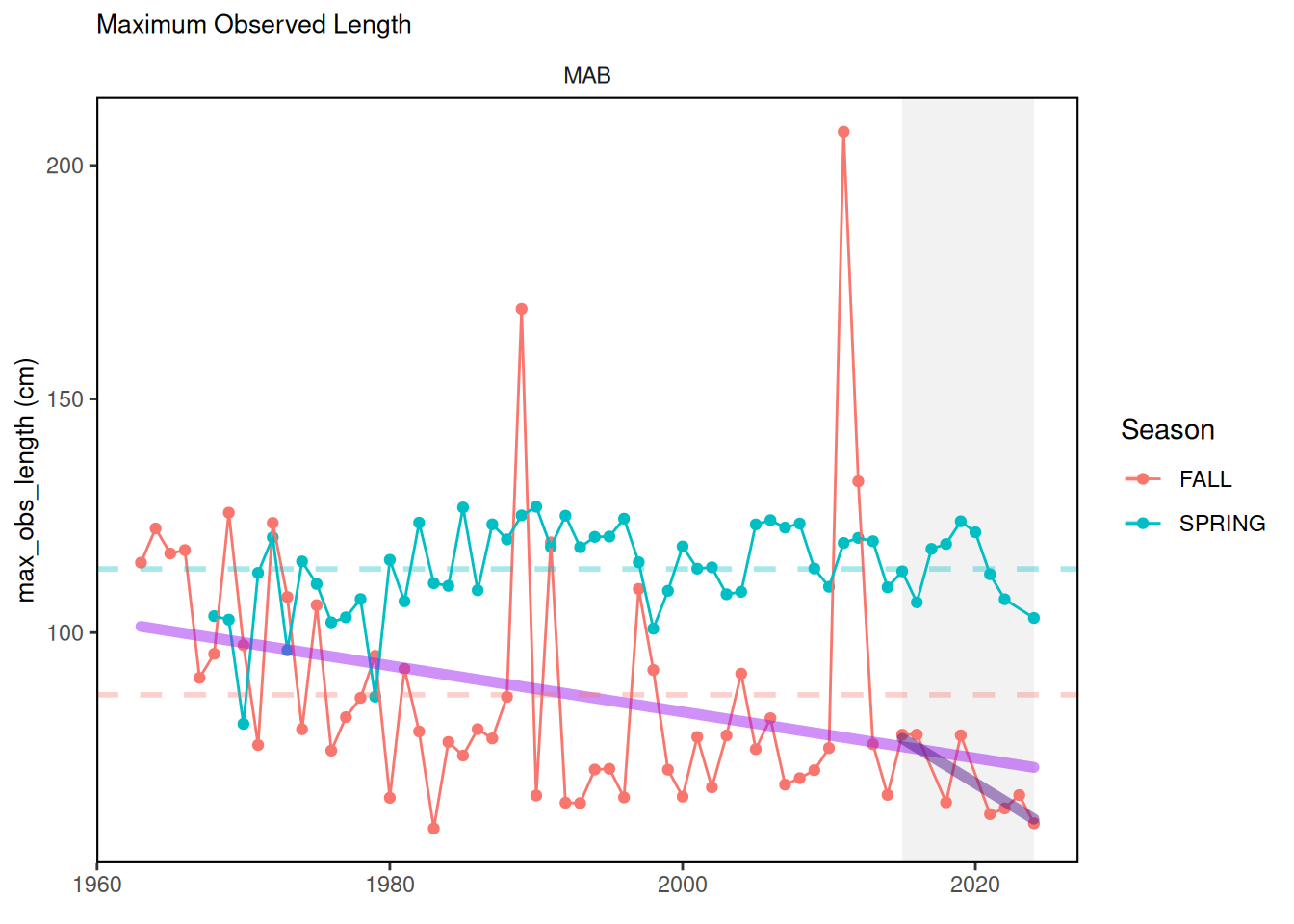
New England, max_obs_length
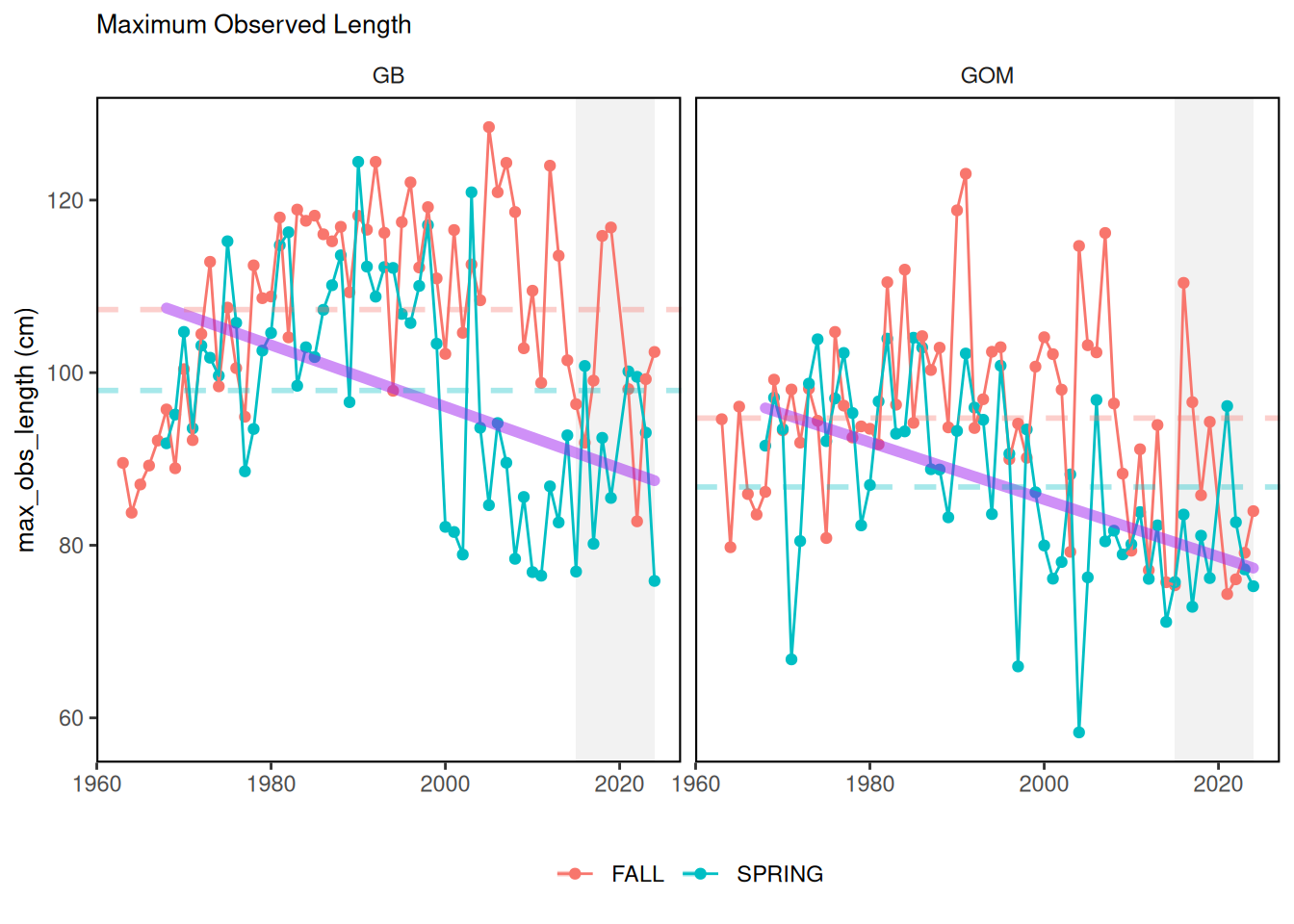
Mid-Atlantic, PC1
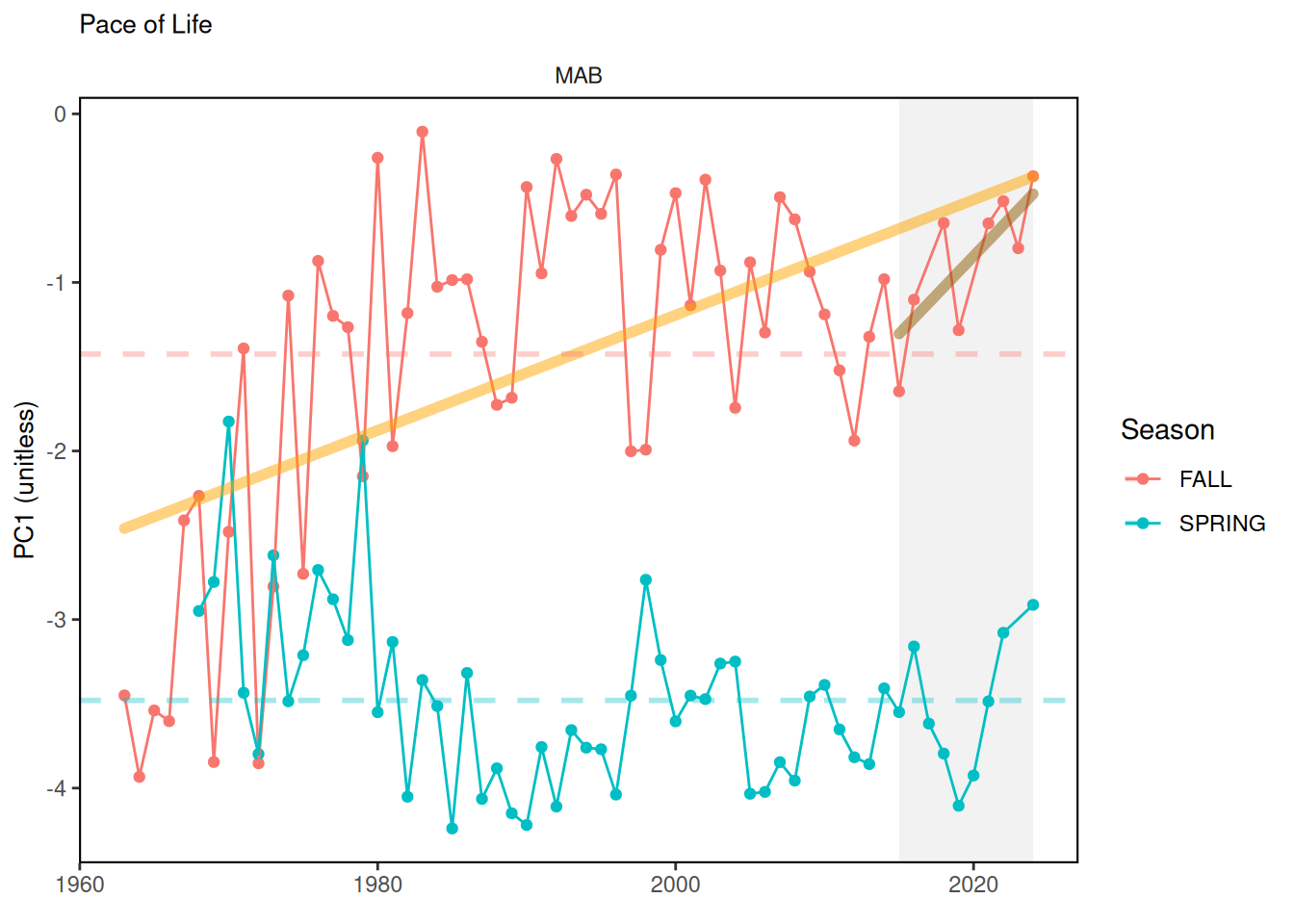
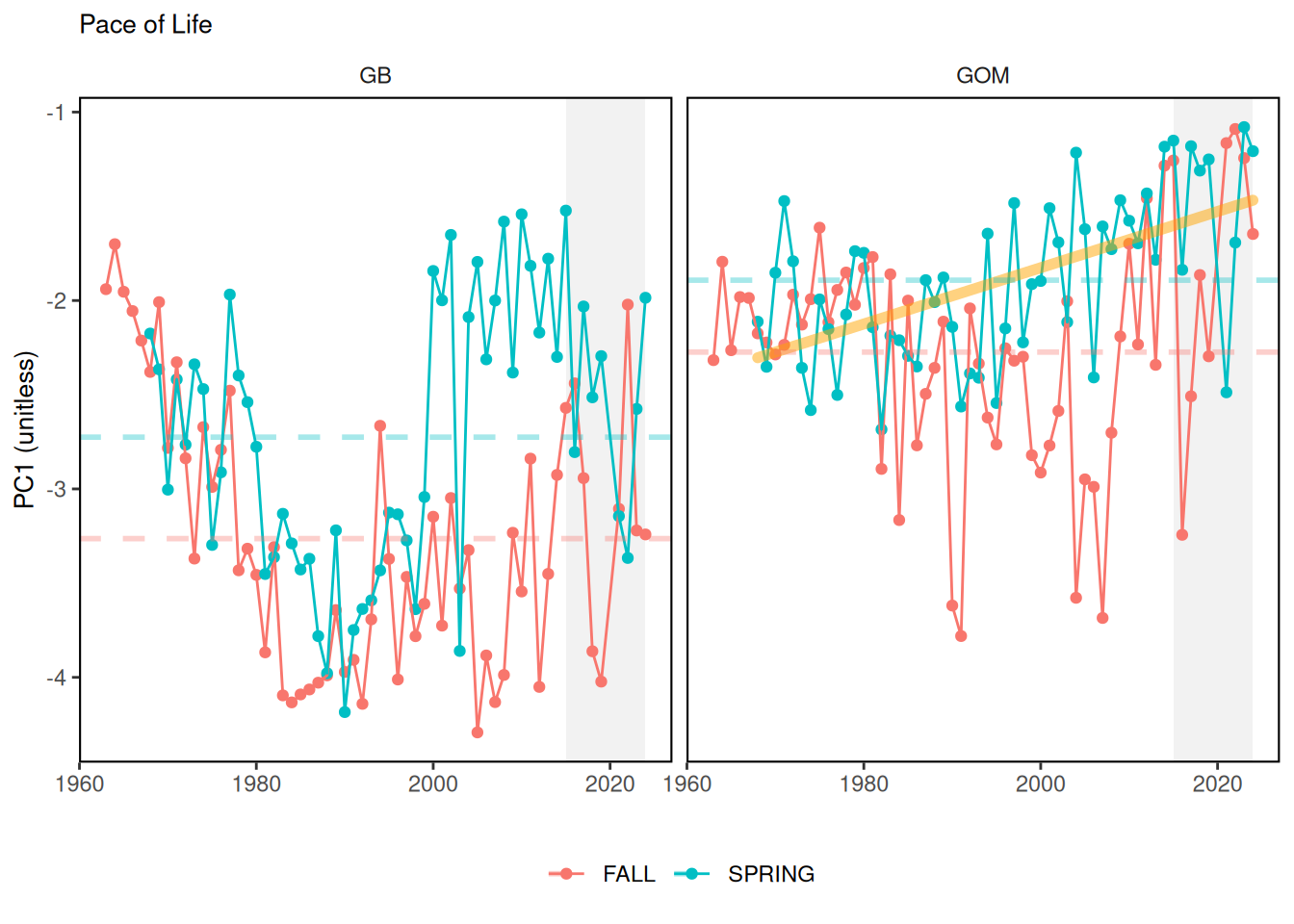
New England, PC1
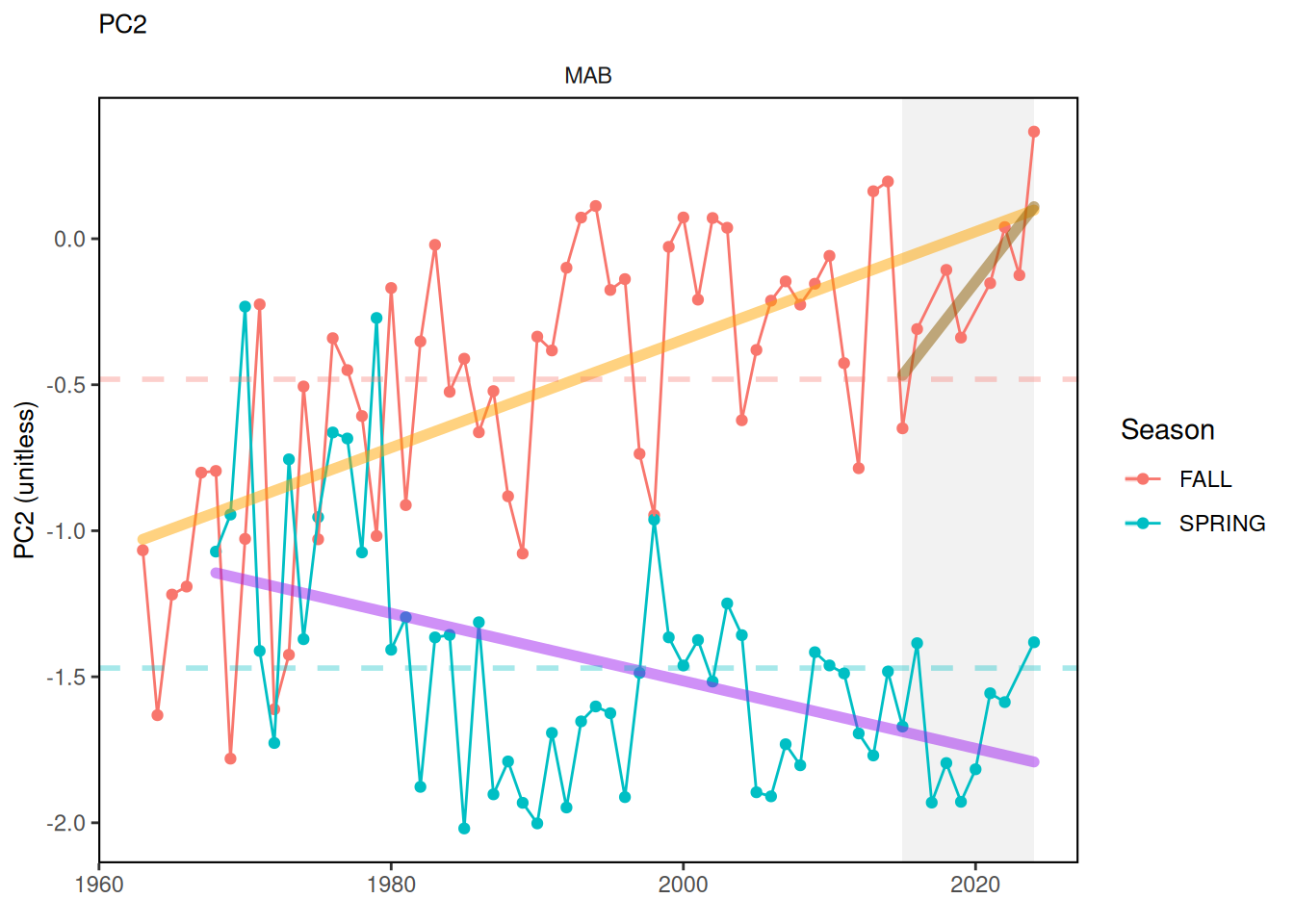
Mid-Atlantic, PC2
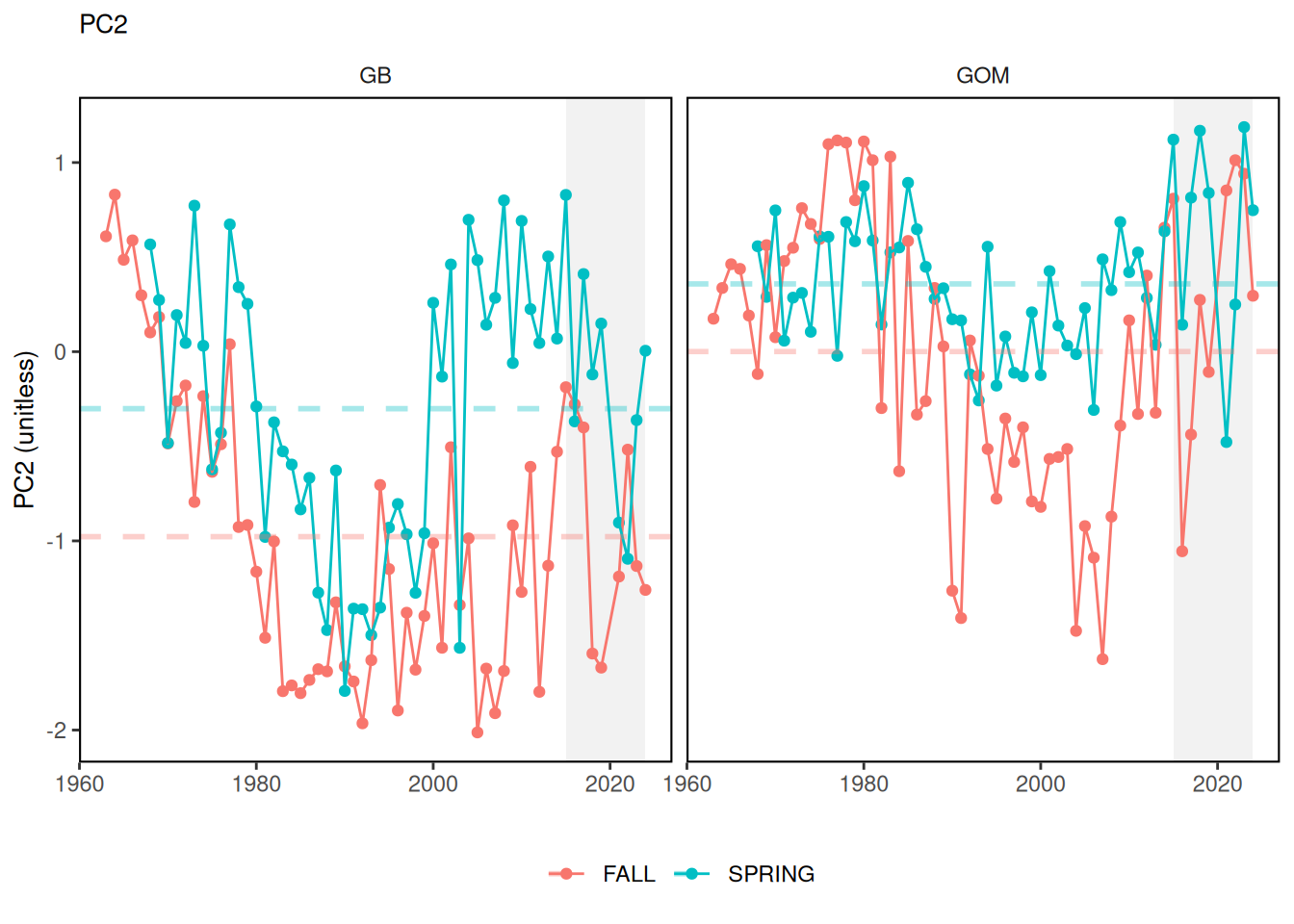
New England, PC2
Mid-Atlantic, PC3

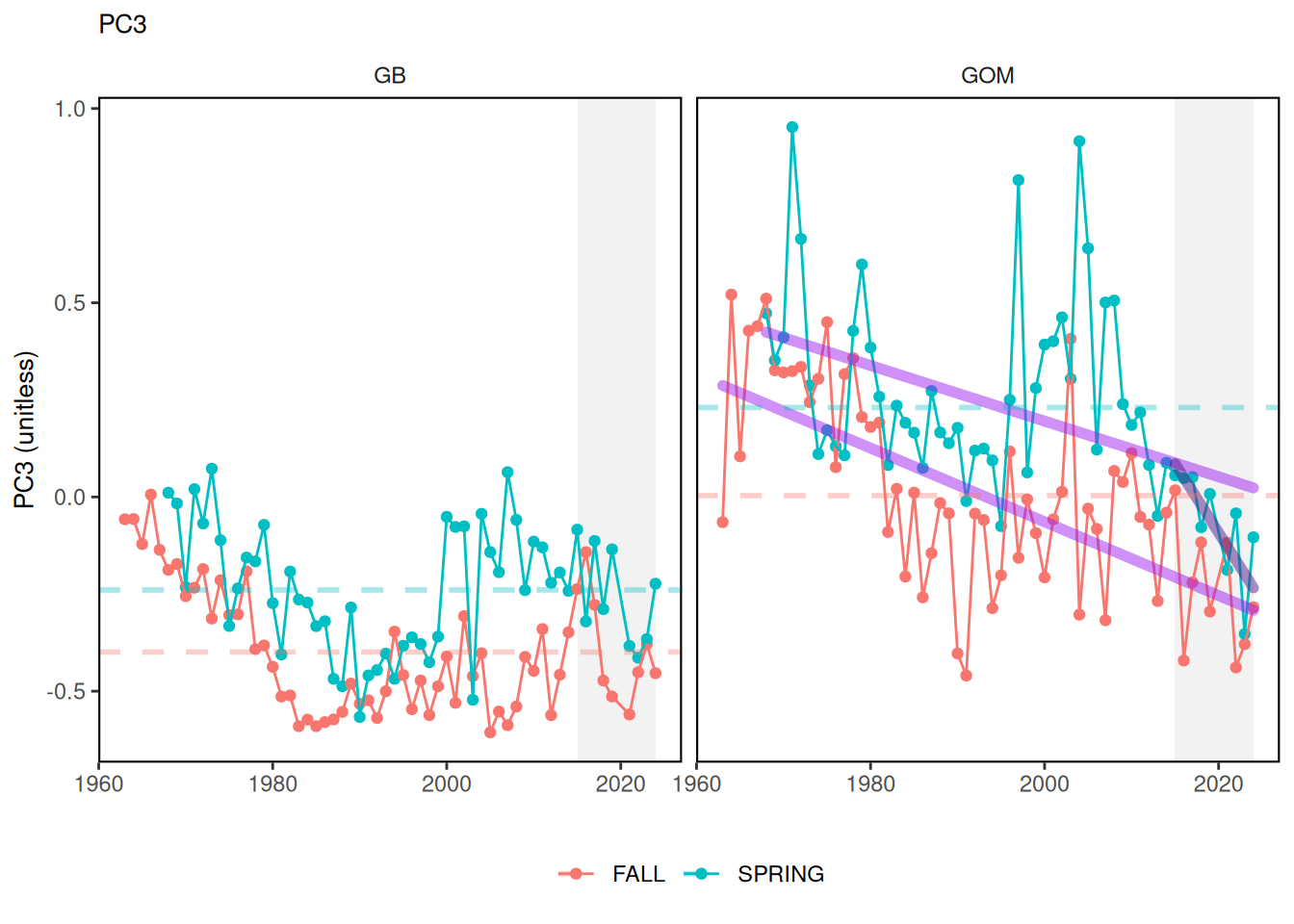
New England, PC3
17.3 Implications
In general, there appears to be equivocal evidence for functional redundancy in traits at both the scale of the NE Shelf and within particular EPU’s. For instance, for trait ordination axes related to the pace of life and fecundity, there was stability in trait distributions for species captured during the fall survey. However, in the spring survey there was evidence for long-term shifts towards slower life history strategies (larger body size, lower fecundity, fewer offspring).
At the EPU scale, there was little evidence for long-term linear trends in trait distributions in the Gulf of Maine and Scotian Shelf finfish communities, suggesting a high level of functional redundancy and stability in the face of dramatic shifts in oceanographic conditions (e.g. increasing temperatures) and other anthropogenic impacts. Conversely, there was evidence for long term change in trait distributions in the mid-Atlantic Bight and Georges Bank. For instance, the fall finfish community on George’s Bank and the spring finfish community in the mid-Atlantic Bight are both showing long-term shifts towards slower life history strategies with lower fecundity. These changes suggest that more research across the finfish community in these regions is needed to understand the ecological and economic ramifications of such change.
17.4 Indicator statistics
Spatial scale: By EPU and full shelf
Temporal scale: 1963-2023, Spring (January-June) & Fall (July-December)
Variable definitions
17.5 Get the data
Point of contact: Bart DiFiore (bartholomew.p.difiore@mass.gov)
ecodata dataset: ecodata::finfish_traits
Tech Doc link: https://noaa-edab.github.io/tech-doc/finfish_traits.html